 What an awful word L O N E L I N E S S is! An illness of one, the words ‘illness’ and ‘one’ literally in it, along with ‘lone’ and ‘ill’. The word is most potently representative of its meaning when written in upper case letters spaced far apart, as I saw it on television this morning. Ten letters equal in height, spelling out the bleakest emotional landscape of all. L O N E L I N E S S. ‘I am so lonely, I need somebody’: loneliness is the desire for company and warmth, a shivering stranger pining for that phantom hut in the snow, glowing hearth ‘neath thatched roof under starry sky, the hearth an earthly star to the crescent moon formed by a semicircle of friends conversing jovially in its fiery berth. What warmth; what company. But the word we are discussing here is one of coldness; it even looks cold to the eye. ‘i’ is almost in the middle of the word (L O N E L I N E S S), the smallest letter, taking the least space. I suppose existence becomes faint when one cannot put oneself in relation to others. If there is no-one to recognise you for who and what you are, how and why do you exist? There is no ‘u’ in loneliness. Loneliness is an illness of one.
S O L I T U D E, on the other hand, trumps soldier with attitude, the word S O L D I E R almost entirely in it. There is an ‘i’ and a ‘u’, an ‘ode’ and a ‘soul’: an ode to your soul. Unlike its pneumonic cousin above (L O N E L I N E S S), it is stoic and unwavering in appearance. It does not cry out for company. Instead, S O L I T U D E celebrates the strength and freedom wielded by a company of one. Even far apart and in upper case the letters look sturdy and well-defined, rooted in confidence. S O L I T U D E commands not attention but admiration, self-admiration: ‘I am my own person, large and full of multitudes’. It is the friend of quiet contemplation and artistic expression—one reads, paints, writes, composes best when alone. ‘I am a complete, wholesome soul all by myself, my existence needs no reassurance for I am sure of myself,’ the word announces, proud on a podium.
Solitude is a closed fist punching the air, loneliness is a limp hand begging to be held. I punch the air. I march to the beat of my own drums. To the steady beat of my heart I say to myself: ‘I am, I am, I am’.
 ‘There’ll never be another Elvis,’ said the old man to the impersonator. But there needn’t be, not when he is survived and granted eternal life by his works, influence, and legacy. Why would we need another Elvis when he is the one and only? The king never died; he is unsurpassable; long live the king.
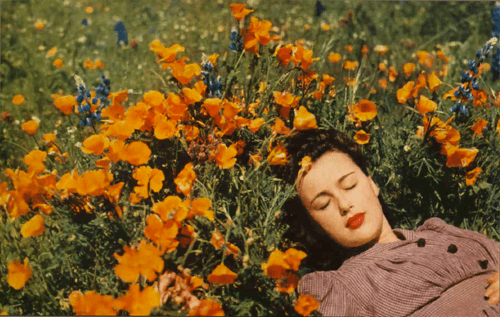 There is a carpark opposite my apartment, and a grassy plot of yet-to-be-developed land beyond it. The houses had been torn down many years ago, and for a while it seemed I was doomed to face an ugly patch of soil and debris whenever I stood on my balcony and gazed down. Ungifted at natural science, I deemed the land infertile. Nothing will ever grow on such a barren piece of land, I thought. Nature, she who wields the wind and rain, thought otherwise. So did the Australian sun. Slowly but surely, patches of grass began to grow. Soon, it had covered the whole fenced-off, apartment-sized square. Then, miraculously, trees started growing. Over a year later, these trees are still small, barely taller than your typical shrub, but they are thriving. And sometimes, flowers bloom on trees, don’t they? Yay or nay, this knowledge is to play a part in the hilarious incident I am about to relate to you; its partner in crime is my terribly shortsighted vision. One day, when brushing my just-washed hair while standing on the balcony sans glasses, I noticed that big, bright orange flowers had appeared on one of the trees, unbeknownst to me until then (or so I thought). I was delighted, but thought little of it once I reentered my living room and became preoccupied with the humdrum chores of daily life. I had forgotten all about those ‘orange flowers’, and would have went on believing that they were indeed what I thought they were — made of petals, pollen and seeds — if I never saw them clearly, with my glasses on. This is precisely what happened yesterday. Exhausted from the glow of my laptop screen and the rigidness of my chair, I decided some fresh air would be good and stepped out to the balcony. I took a deep breath, looked at the clear sky above, the church buildings on the side, and the grassy land in front with the growing trees, one of which is bearing flowe–wait. Hold on a second, it can’t be—is that what I think it is, filling the gaps between the leaves from where I stand? A discarded, corrugated iron-looking piece of orange construction thing lying right behind the tree in question? In a way that makes it look like orange flowers on the tree because parts of it are hidden by the tree’s leaves and others, blossom-sized parts, not? Yes, my corrected eyes and common sense said, yes of course it is, you daft. You mistook an ugly, manmade thing for nature, said the melodramatic overthinker in me. What’s more, it continued, the object is used to construct buildings, which destroy nature. How ironic. How wonderful though, to have mistaken such a thing for nature’s work of beauty, gushed hope. The writer in me began typing.
 the rose garden